
Motivation • Inspirations • Examples • SonicTexting • Explorations • Conclusions
|
•• Inspirations ••
I was inspired by interactions with seemingly simple physical objects.
 |
Think about using a pencil; writing is an experience that involves touch and movement, visual traces and sound. We would never think about a pencil as having sound; the sound is part of the inherent "pencil-ness" of the pencil. It corresponds perfectly to our motions. It is a joined consequence of the materials involved and the movements we make. |
 |
This led me to think about "Symptomatic" sound: sound that is a symptom of an action, usually a mechanical phenomenon. Symptomatic sound typically contains inherent variation: it may never sound exactly the same twice. |
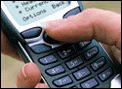 |
Sound in digital products is usually not like that; this "Introduced" sound is designed for communication purposes. Introduced sounds typically do not contain variation - they are more binary phenomena. Think of the mobile phone key sounds or the "click" introduced into digital cameras. |
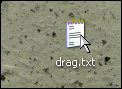 |
However, this is not always the case. An important example is the 'Sonic Finder' - a sound layer developed by Bill Gaver for the Apple Search application around 1989. The Sonic Finder used highly informative sound; for example, dragging a file created sound that varied according to the file size and the element over which it was being dragged. |
THIS THESIS IS ABOUT THESE QUALITIES OF SOUND - ABOUT THE CONENCTION BETWEEN HANDS AND EARS.
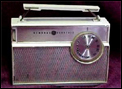 |
Hands and ears work together with ease; think about tuning an old radio. |
 |
Hands and ears work together with pleasure; think about popping bubble-wrap. |
Next > Examples
 |
|
Audio-Tactile • Michal Rinott • Thesis Project • Interaction-Ivrea 2004 |
|